Roller Derby, Shutter Speed, and Fighting the Light
I had no idea that roller derby still even existed
PHOTO JOURNAL 2026
James Bradley
7/2/20266 min read
I had no idea that roller derby still even existed !
Roller Derby, Shutter Speed, and Fighting the Light
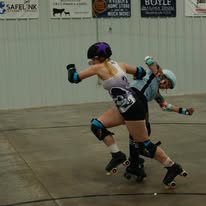
Up until this point I had no idea that roller derby still even existed. I remember watching it on tv back in the late 70’s when I was a kid, so imagine my surprise when I got invited to come and get some shots of a match. This one was a women’s flat track roller derby bout between the Portneuf Valley Bruisers from Pocatello, Idaho and the Bitter Sweet Bombshells, from Rock Springs, Wyoming. I had photographed sports before. Basketball, which was a miserable failure because I had zero clue about how crappy gymnasium lighting can be, and golf, but you heard that story already.
Derby is a whole different world. It’s fast, crowded, physical, and constantly changing, kind of like a family reunion with the 57 miscellaneous cousins, aunts, and uncles that you have never met. Heavy stress on the constantly changing! If I didn't stand still in my designated spot, I would get run over! Not by the competitors, an aunt, an uncle, or a cousin either, but instead I almost got smashed by a referee!
Roller Derby doesn’t politely wait for you to figure out your camera settings. I was forced to quickly learn how to adjust shutter speed on the fly, but we can talk about that a bit later on in more detail. I had already been working through the exposure triangle, but this sport made shutter speed feel a lot more relevant to what I had learned from my previous sports and wildlife shooting experiences. The athletes were moving fast, changing direction, blocking, falling, and skating through changing light. It was a nightmare, but some how I managed to get some good shots.
The shutter speed controls how long the camera lets light hit the sensor. For example a 1/30 shutter speed is relatively slow. It can be used to capture motion blur and show movement. A fast shutter speed will do the opposite. I shot most of the derby with a 1/800 to 1/1250 or more because it freezes motion. It allows you to catch the minute details like facial expressions, an oddly twisted knee, or a skater mid fall. With my wildlife photos, specifically birds I adjust my shutter constantly between 1/1000 and 1/2500 depending on the bird I am trying to capture. A slower shutter speed lets in more light. It makes the image darker, but it also makes motion blur more likely. A faster shutter speed freezes movement, but it lets in less light. That means I had to balance sharpness against exposure the whole time.
For roller derby, that balance is tricky. If the shutter speed is too slow, the skaters blur too much and the action can get super muddy really fast. On the other hand, with a faster shutter speed, the motion freezes better, but the image can get too dark unless I open the aperture or raise the ISO. I rarely adjust the ISO because it gets out of control quickly and becomes a super grainy mess and ruin the 3479 photos I have to process later. So the whole shoot became a balancing act between catching the action and keeping the photos bright enough to use. The trick was getting this puzzle to work correctly. Dark, light, grain, motion blur, motion freeze….AAACK….so much to deal with! Photography is fun, right?
The light I was working with the day of the match was a huge challenge. I was shooting late afternoon, so I was fighting two different kinds of light at the same time. Inside the building, I had fluorescent lights overhead while natural light (sun) was coming in through the doors and windows. Some areas were brighter, which caused the shots to be overexposed or have the highlights blown out. Some were darker, which made the photos unreadable because they were too dark. The color of the light changed depending on where the skaters were on the track. I got an education in Kelvin settings that day as well.
That kind of mixed lighting is a giant pain. The fluorescent lights had one color and the sunlight had another. Fortunately, I had been researching about how to adjust Kelvin settings based on what type of light you are shooting in. There are settings in the camera that allow you to read what the Kelvin light is. Surprise, if you learn how to adjust this, it actually helps quite a bit! My research also taught me to set a hot button (preset key) in camera that went straight to the Kelvin settings and I could adjust the setting based on what I was seeing in camera. Holy crap! What a difference this made for me. My camera was dealing with several types of light, but now it had help from my highly trained, calibrated eyeball (NOT). All of this also meant exposure could change depending on where I was aiming. One part of the track (rink) might look decent, and then a skater would move into a brighter patch near a door or a darker section away from the windows, and suddenly the settings were not even close to right anymore, but I was armed with some more photography insight and almost ready.
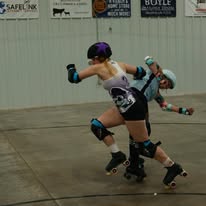
Sports photography is not just about “fast shutter speed equals good.” It is about choosing the right shutter speed for the moment and adjusting to the conditions on the fly. Sometimes I need to freeze the action as much as possible for that amazing action shot. Other times, a little motion blur helps show speed and movement. The trick is learning when the blur looks intentional and when it just looks like I missed, which I still quite often do, but I’m still learning, right?
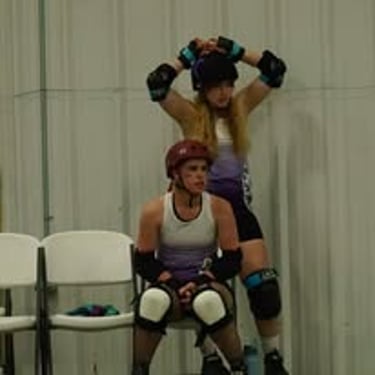
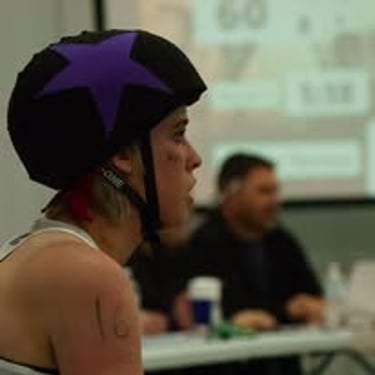
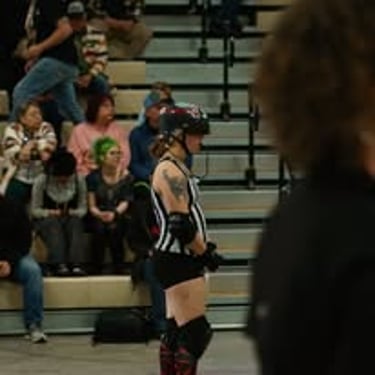
My close-up sideline shots were a different kind of lesson. These gave me a chance to work with focus, background blur, and storytelling. What I like about these shots before or between action is that they show the concentration and intensity of the athletes. Not every sports photo has to be a collision or a big action shot. Sometimes the face, posture, or simply the waiting tells much of the story.
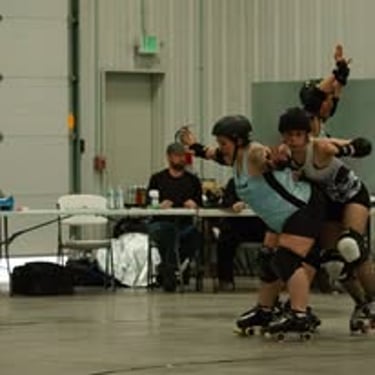
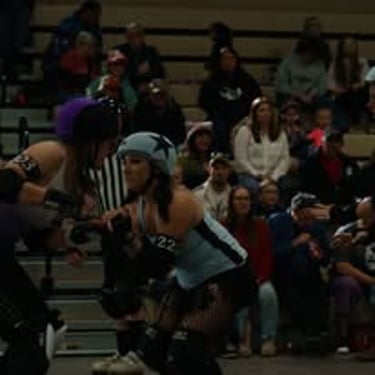
My long distance action shots were much harder to compose on the fly. Even though I was shooting most of these with my 50-400mm Tamron lens, I was shooting at distances from 5 feet to 20 yards. The skaters, referees, spectators, signs, walls, chairs, and all kinds of background clutter were all competing for the camera’s attention. That makes composition tough. I had to catch the action while also watching what was behind it, which is easier said than done when everyone on skates is moving at Mach 4!
My favorite photo from this set is probably the close profile shot with the purple star helmet: the jammer. These are the players that score the points for the team. She has a quiet intensity and the look of trying to refocus and be ready when she goes back in. The shot also has a nice depth of field which can make a huge difference in the photo’s final look. I like a good background blur. It works to keep the focus on the skater. It feels more controlled than some of the action shots, and it shows that there is a bit of a methodical side to the sport.
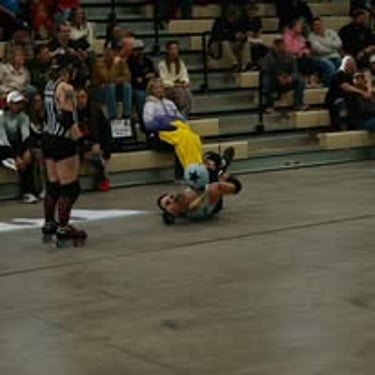
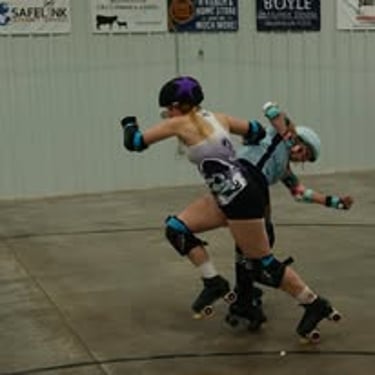
Several of the action shots, where the skaters are tangled up and fighting for position, show the physical side of derby, and it gives a better sense of how much is happening at once. The worst part of these shots was keeping enough shutter speed to freeze the important parts of the movement without killing the exposure completely. Believe me, I tried to kill several of the shots.
My least favorite shots are probably the ones where the light got away from me (super dark). My shutter speed was wrong and the action blurred more than I wanted. That is not a knock on the moment. It is just part of learning how hard indoor sports can be. Between the speed, the mixed lighting, and the unpredictable movement, I had a lot going on.
I think you get the idea of why shutter speed matters so much. It does not just control brightness. It controls how motion feels. If it is too slow, the subject can turn into a blur. Too fast, and I may freeze the action but fight darker images. Somewhere in the middle is the usable shot, and finding that middle while people are skating, blocking, and falling is the hard part, but I think I got a few good ones.
This shoot was a good reminder that camera settings are not just numbers. They are choices. I still make more bad than good choices as far as these go, but I’ll keep plugging away. Shutter speed, aperture, and ISO were all fighting with each other throughout this shoot, but with my new found knowledge I didn't have to rely on the camera's automatic settings, which sometimes misread my intent. It did not have to take up all my slack, and the results show. I was shooting with my dinosaur A6000. The settings are more difficult to change on the fly. My full frame Sony A7iii was in the shop getting a new shutter put in it.
I still have a lot to learn, but this was a great self-taught lesson in indoor sports photography. The fast action, bad lighting, mixed color, cluttered backgrounds, and moving subjects were basically, everything that could make it harder because it all decided to show up at once, but I was up for the challenge!
Good times.
I would love to get some feedback from you all about the photography learning process. Please feel free to shoot me an email through my contact page.
Thanks for reading!